Retrospective
Started as a C assignment. Rebuilt from scratch 13 years later.
In the spring of 2013, two students spent a semester building a Tron light-cycle game in C — SDL for the screen, FMOD for the sound, a Makefile, and a lot of doxygen comments nobody wanted to write. In 2026, one of them rebuilt it in the browser, porting the simulation function by function.
One semester, in C
LIF7, Université Claude Bernard Lyon 1. A shared SVN repo, then git. The commit messages, verbatim:
-
13 Mar 2013
Premier ajout du projet
-
19 Mar 2013 · matthieu
Ajout de l'uml *.dia — the module diagram that the header files then had to match.
-
2 Apr 2013
Les motos Bougent et créent leur Mur...Ca MAAARCHE!!
-
9 Apr 2013 · matthieu
les angles des virages sont propres — the turn geometry, pivoting the bike around a corner.
-
14 Apr 2013
Ajout du Bonus fonctionnel, nettoie grille Manette semi-fonctionnel Joueur init à N joueurs.
-
1 May 2013 · matthieu
début de l'IA
-
5 May 2013 · matthieu
On est théoriquement capable de calculer la distance entre deux points de la grille, mais avec 28 000 ! appels ...
-
7 May 2013 · matthieu
algo de M.**** pour le calcul des distances sur toute la grille depuis un joueur ... OK — the flood fill.
-
24 May 2013 · matthieu
Sans les créations de fichiers annexes on fait tourner 7 IA à l'aise Blaise !
-
27 May 2013
On continue avec l'amélioration des commentaires Doxygen, c'est passionnant
-
28 May 2013
Fin de la Fucking Doc
-
3 Jun 2013 · matthieu
IA plus agressive de près. · Code terminé
-
4 Jun 2013 · matthieu
Vrai dernière modif avant presentation.
— then nothing. A README in 2015. Thirteen years of the repo sitting still. —
Rebuilt, 2026
Same feel, same mechanics. A deterministic fixed-step simulation with a Canvas renderer — no engine, no framework.
-
v0 — the simulation
bike,trail,collision,match— ported from the C, each module citing the function and line it came from (bougeMotoatJeu.c:234). -
v0.5 — couch play
Title / setup / countdown / round screens. A menu, instead of editing
Constantes.hand recompiling. -
v0.7 — the soul
The three bonuses, the "graze" grace mechanic, gamepads, up to eight players.
-
v0.8 — feel
Bloom, screen shake, explosion particles, and sound — every effect synthesised in the browser, since the 2013 soundtrack was commercial music.
-
v1 — the AI, minus 400 lines
The same coarse danger grid and BFS distance maps. A new brain: score the three legal moves, pick the best.
Then / now
What the port actually changed.
2013
- C89 + SDL 1.2 + FMODLinux only, built with a Makefile in Code::Blocks.
- Constantes.hRecompile to change the player count or the win score.
- srand(time(NULL))Called all over — the RNG reseeded mid-game.
- choisieDirection~450 lines of nested if/else for the AI.
- clock()CPU-time frame pacing that drifted on fast machines.
- Daft Punk, TRON: Legacy OSTStreamed through FMOD.
2026
- TypeScript + CanvasRuns anywhere with a browser. Built with Bun.
- a setup screenPick players, humans, AI level, rounds — no rebuild.
- one seeded RngThreaded through the tick. Same seed, same game.
- brain.tsA scored evaluator over three moves. ~90 lines.
- fixed 20 Hz stepDecoupled from an interpolated render.
- a synthwave bedOscillators and filtered noise, generated live.
The AI, before and after
Both versions do the same thing: flood-fill the grid, find the nearest reachable opponent, choose a turn. Only the choosing changed.
if(directionCourante==HAUT){
  if(colonne1>=distanceSecurite){
    for(i=1;i<=distanceSecurite;i++){
      if((*grilleDistance)[ligne1][colonne1-i]==-1){
        boolDistanceValide=0;
      }
    }
    if(boolDistanceValide==1){
      JeuActionClavier(joueurIA,GAUCHE, ...);
    }
    else{
      if(ligne1<=distanceSecurite){
        JeuActionClavier(joueurIA,DROITE, ...);
      }
      else{
        /* ...four more levels... */
      }
    }
  }
}
else{ if(directionCourante==BAS){ /* ... */ } }for (const { dir, move, straight } of candidates) {
const clear = clearAhead(danger, headIdx, dir, margin);
let score;
if (clear < margin) {
score = -1e9 + clear * 1000; // unsafe
} else {
score = floodFill(danger, enter, distMove); // room
if (chasing) score += (maxDist - dist[enter]) * weight;
if (straight) score += straightBias;
}
if (score > bestScore) {
bestScore = score;
bestMove = move;
}
}≈ 450 lines of branches → one scored loop. The tree was a specific answer for every board state someone could think of. The loop is a general one: how much room does this move leave, and does it close on the target.
Artefacts
Three things that survived the move.
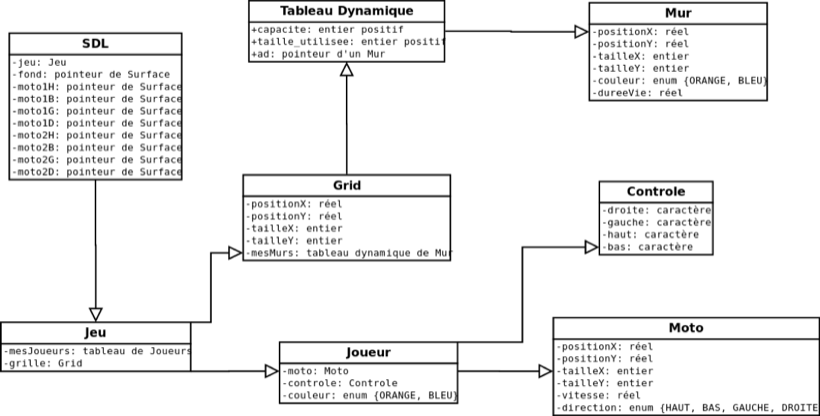
Moto, Mur, Grid, Bonus,
Jeu.
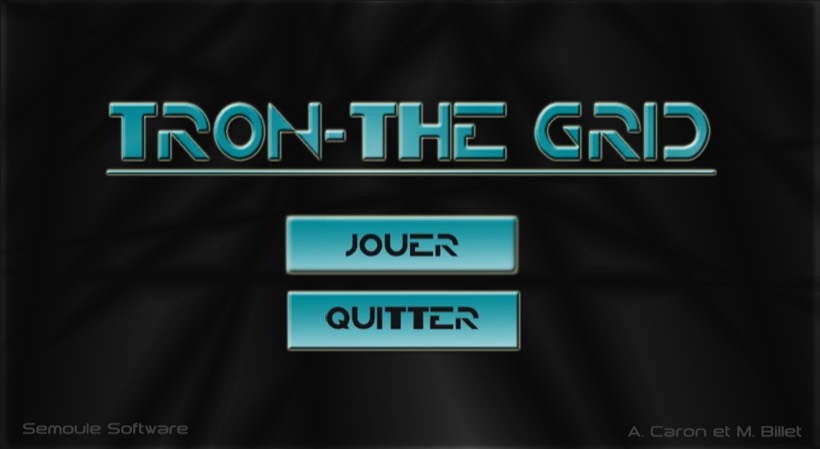
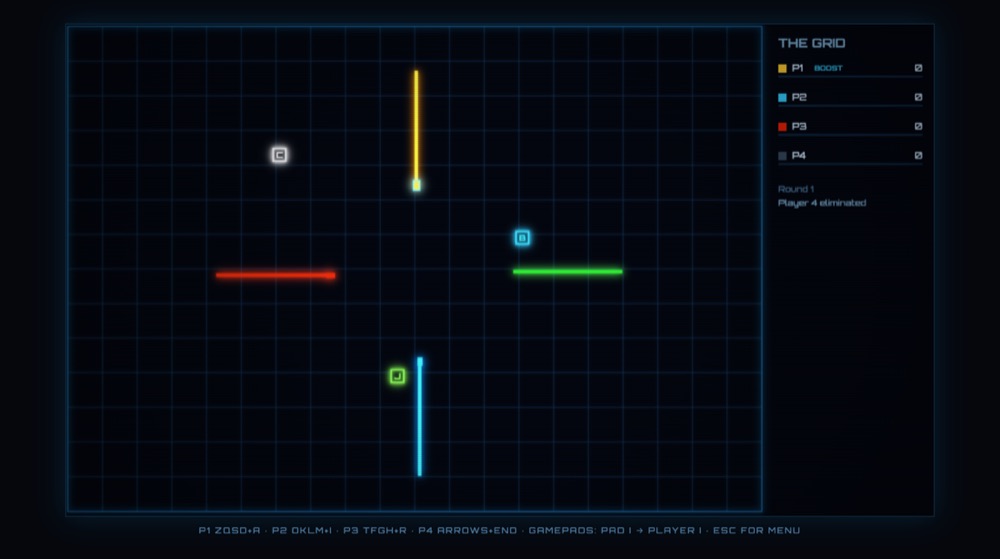
Now playable
Enter the Grid →
2013 — Antoine Caron & Matthieu Billet
2026 — Antoine Caron
source — github.com/Slashgear/projet-tron (the original)